All Categories
Featured


Understanding Global Labor Laws Dynamics for 2026
Onshore outsourcing usually has the greatest expense due to the higher overall cost and functional expenses in developed countries. Nearshore outsourcing has a moderate expense due to lower labour and operational costs in neighbouring nations. Offshore outsourcing has the lowest expense due to considerably lower labour and operational costs in establishing countries.
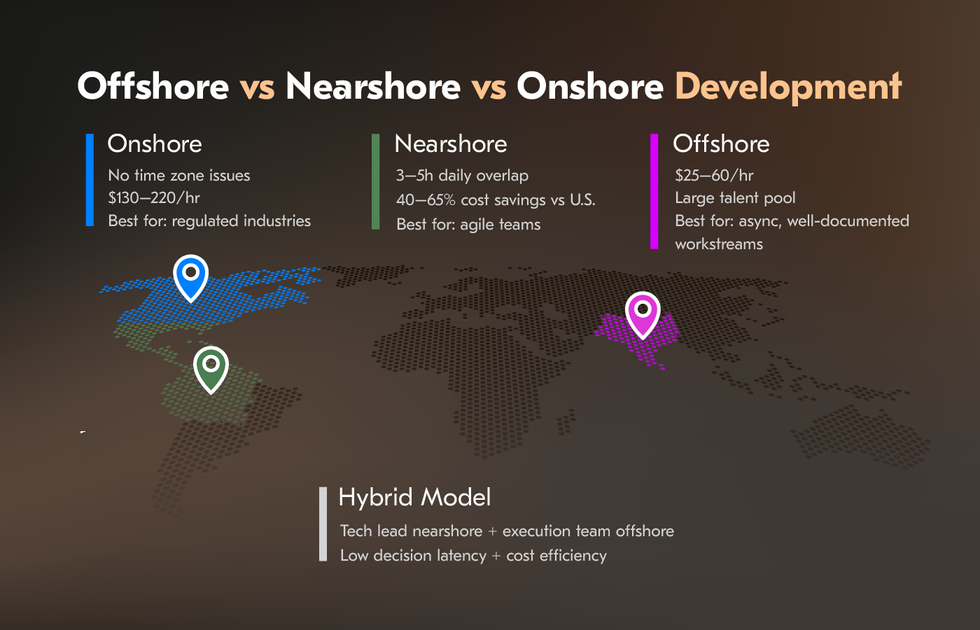
Nearshore outsourcing might also have access to similar facilities, but offshore contracting out may have restrictions in regards to infrastructure and technology. Want to see whatever in one location? Understanding about the various outsourcing options is just the initial step; choosing the ideal outsourcing model for your job depends upon your particular needs and requirements.
When thinking about offshoring, nearshoring, or onshoring, each choice has its advantages and downsides. For example, offshoring and nearshoring might be an excellent fit if you need cost-effective services or top-tier expert skills in developing countries. Onshoring is recommended if you value in-person cooperation and quick travel. It is also possible to integrate outsourcing designs, referred to as multisource or hybrid outsourcing, to optimize expenses and find the best talent for your app development needs.
Mastering International Workforce Laws Dynamics for 2026
For example, you can employ an onshore group for top-level tactical work that needs in-person collaboration, a nearshore group for style work, and an overseas team for development work. By utilizing numerous outsourcing models, you can enhance your costs, find the best talent where it matters, and guarantee a successful result for your project.

Latest Posts

Navigating International Workforce Law Changes in 2026
Managing Current Legal Risks in Global Labor Hubs

Legal Best Practices When Managing Offshore Labor Laws